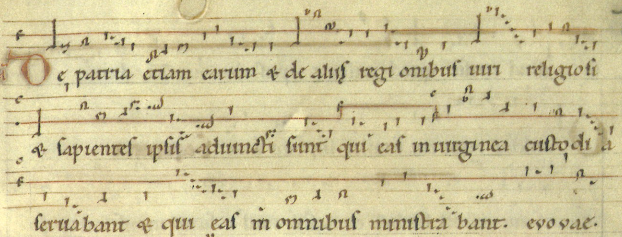
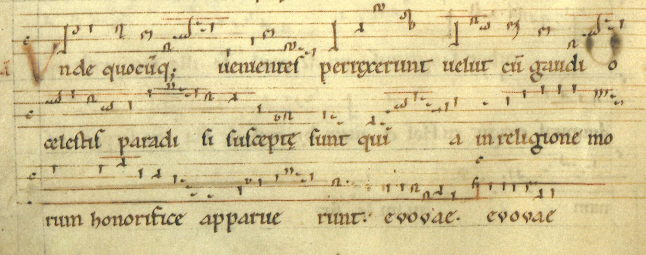
The third antiphon in the series: Office for the feast of Saint Ursula, 8 antiphons in matutinis laudibus (for lauds).
Antiphon 3. de patria etiam earum
from their fatherland and from other regions religious men and wise men came to join them who kept them in virginal protection and ministered to them in all things
No fewer than 13 of Hildegard von Bingen’s 77 liturgical chants are in honour of Saint Ursula and companions. With Saint Ursula’s feast day coming up on October 21st, I have decided to create a mini-series of chants that will feature the eight antiphons that Hildegard wrote for singing at Lauds as part of the Office for the Feast of Saint Ursula, together with my revisited versions.
Here is the first antiphon as written by Hildegard. My plan is to first record the 8 chants and then for the revisited versions to form a coherent song cycle. Watch this space to see how it turns out!:
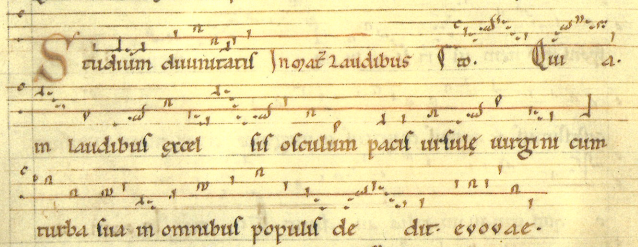
Antiphon 1. studium divinitatis
divine zeal in highest praise gave the kiss of peace to the virgin Ursula, with her crowd, among all the people.
Throughout this project, I have sometimes been surprised by the turn a particular piece has taken. This one is a case in point.
My “revisiting” of Hildegard’s hodie aperuit uses the chant melody as the basis for a kind of motet. It follows in the footsteps of many medieval and renaissance works that either set, or were based on, popular secular or sacred songs.
The motet section comes first, followed by my setting of the original chant. The motet closely mirrors the melodic material of the chant. It is a homage, inspired by our musical past.
I dedicate this piece, with thanks, to the female vocal ensemble La Noeva with whom I have sung this little gem of a chant many times, and whose voices I hear in my head.
hodie aperuit – the door opens
today a closed door has opened which the serpent suffocated in woman and in the dawn shines the flower of the virgin mary.