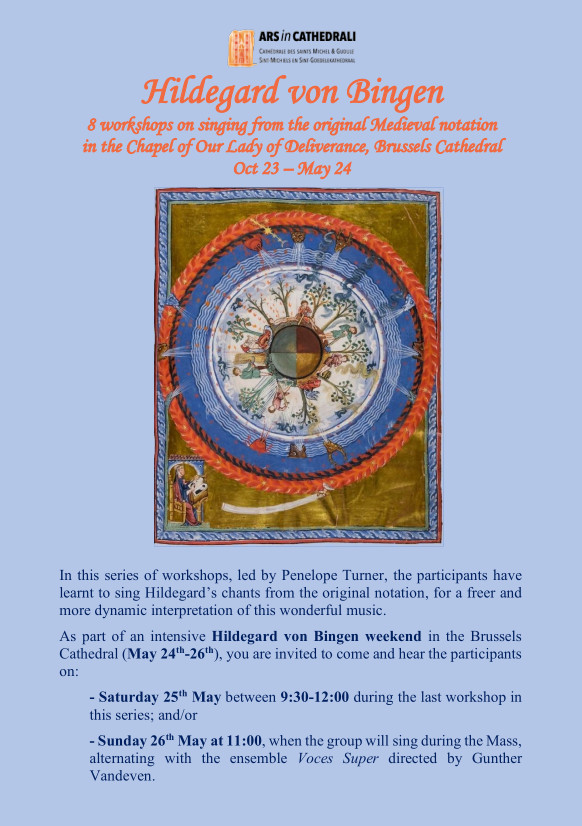
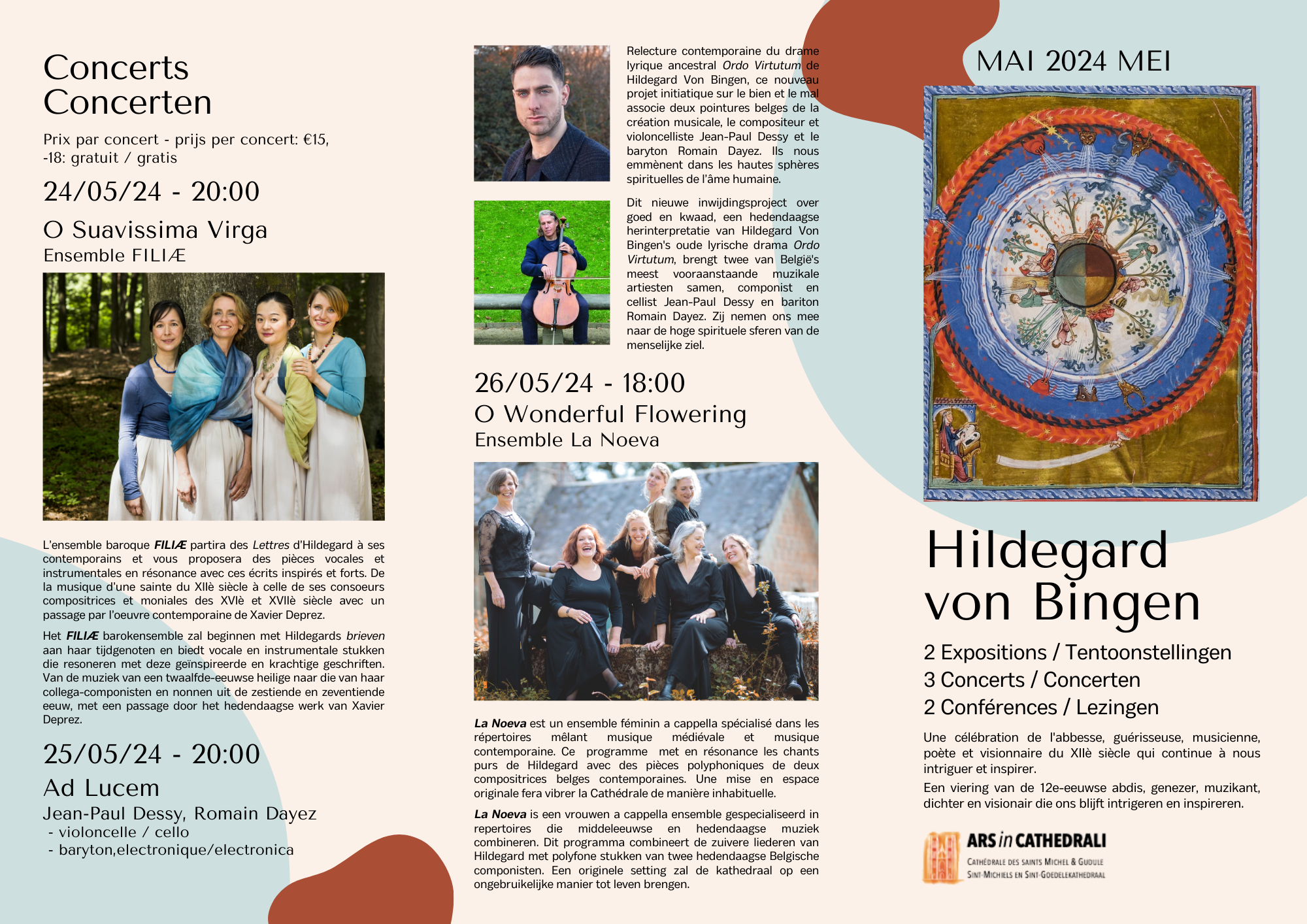
My series of Hildegard von Bingen workshops in the Brussels Cathedral is gradually drawing to a close. Our last workshop will be on Saturday May 25th, during the intensive Hildegard weekend that is planned in the Brussels Cathedral for May 24th-26th. This project will then culminate in our taking part in the Mass at 11.00 on Sunday May 26th. You are most welcome to join us – see the flyer for the details 🙂
I’m very excited to announce an intensive Hildegard von Bingen weekend in May! From Friday 24th May until Sunday 26th May, there will be concerts and conferences in the Brussels Cathedral. I will be singing on Sunday 26th at 6pm with La Noeva, as we present some of Hildegard’s chants together with the stunning Amour Caritas by Belgian composer Paula Defresne and some of my own compositions from my Hildegard Revisited project.
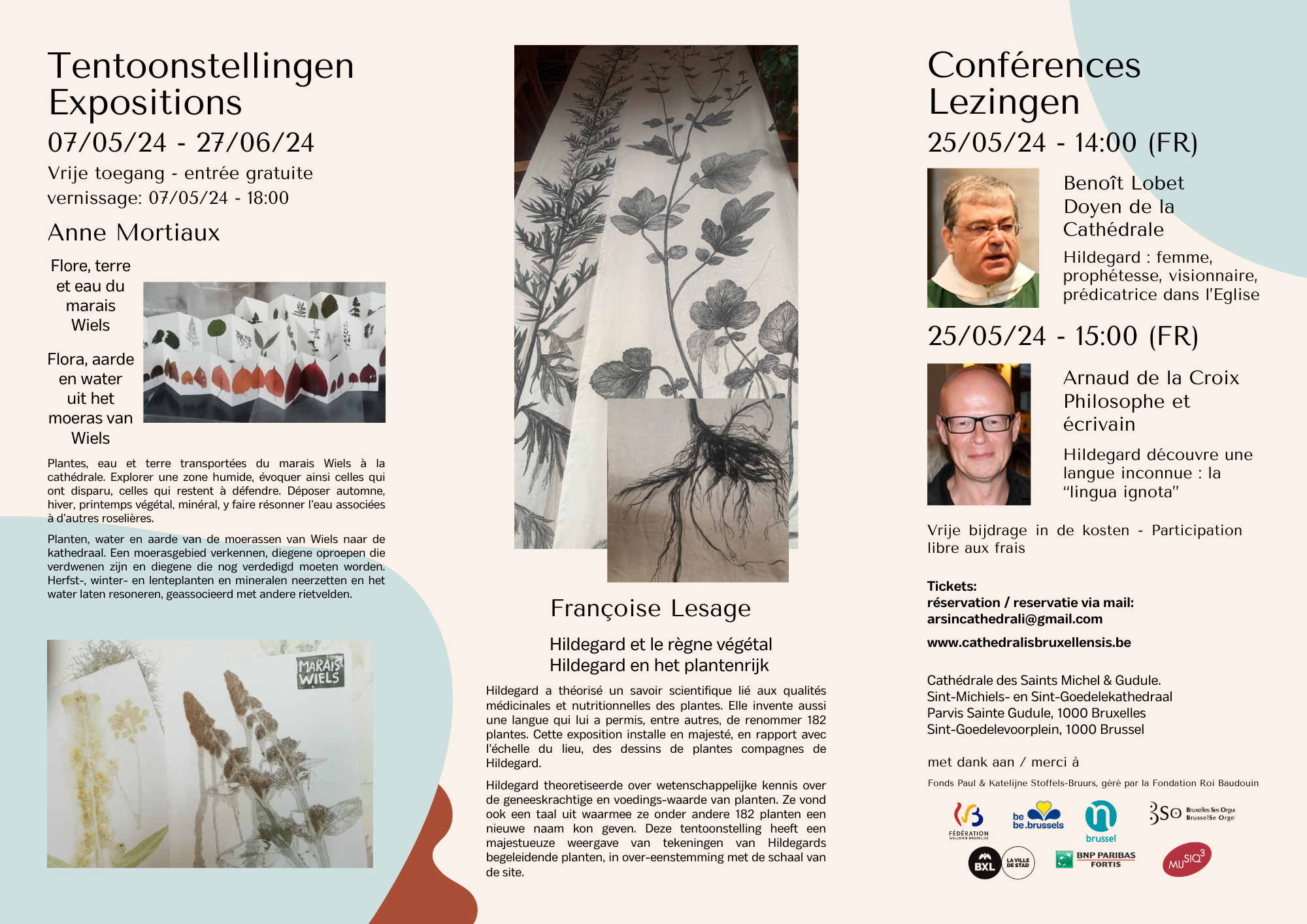
And that’s not all! From May 8th (vernissage on May 7th) until June 27th you can visit two wonderful installations, by artists Françoise Lesage and Anne Mortiaux, that will fill the Cathedral with Hildegard’s presence.
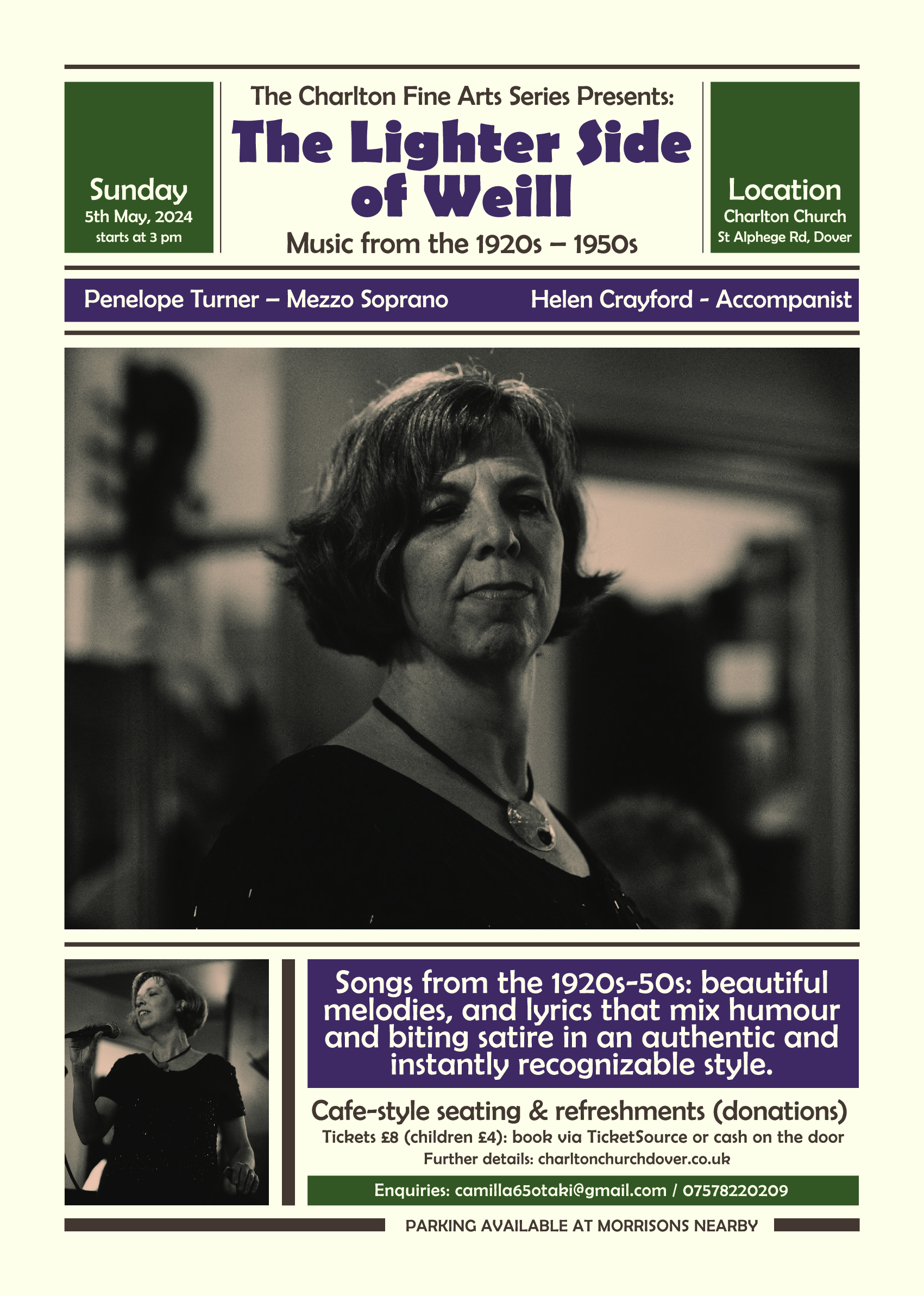
On Sunday May 5, 2024, I will be in Dover, singing some vintage gems by Kurt Weill and a few of his contemporaries in the Charlton Fine Arts Series. My accompanist is the talented Helen Crayford.
You’ll find the details in the poster below. I look forward to seeing you there!
This most recent revisiting is dedicated, with love, to my late mother, Susan Turner.
o magne pater– grief and supplication
O great father, we are in great need. Therefore we now beg you, we beg you through your word, by which you made us, and that fills us with everything that we need: now may it please you, Father, for it suits you, to regard us through your help, so that we do not fail and that your name does not grow dark in us; and deign, through your own name, to help us.
This weekend, my good friend and colleague Jos Somsen and I will be performing our “Winter Experience” concert twice in the Netherlands. Candlemas – a time to celebrate the return of the light after a winter of darkness with music by Hildegard von Bingen (both “pure” and in my arrangements), Yiddish songs, beautiful images of nature, special texts, and communal rituals (lots of candles!)